I completely agree with this view on mastery from American fashion designer, writer, television personality, entrepreneur, and occasional cabaret star Isaac Mizrahi:
I’m a person who’s interested in doing a bunch of things. It’s just what I like. I like it better than doing one thing over and over. This idea of mastery—of being the very best at just one thing—is not in my future. I don’t really care that much. I care about doing things that are interesting to me and that I don’t lose interest in.
Mastery – “being the very best at just one thing” – doesn’t hold much appeal for me. I’m a very curious person. I like jumping between various creative endeavors that “are interesting to me and that I don’t lose interest in.” Guitar, web design, coding, writing, hand lettering – these are just some of the creative paths I’ve gone down so far, and I know that list will continue to grow.
I’ve found that my understanding of one discipline fosters a deeper understanding of other disciplines. New skills don’t take away from each other – they only add.
So no, mastery isn’t for me. The more creative paths I go down, the better. Keep ‘em coming.
Update 4/2/18
Quartz recently profiled Charlie Munger, Warren Buffett’s billionaire deputy, who credits his investing success to not mastering just 1 field — investment theory — but instead “mastering the multiple models which underlie reality.” In other words, Munger is an expert-generalist. The term was coined by Orit Gadiesh, chairman of Bain & Co, who describes an expert-generalist as:
Someone who has the ability and curiosity to master and collect expertise in many different disciplines, industries, skills, capabilities, countries, and topics., etc. He or she can then, without necessarily even realizing it, but often by design:
Draw on that palette of diverse knowledge to recognize patterns and connect the dots across multiple areas.
Drill deep to focus and perfect the thinking.
The article goes on to describe the strength of this strategy:
Being an expert-generalist allows individuals to quickly adapt to change. Research shows that they:
Have more breakthrough ideas, because they pull insights that already work in one area into ones where they haven’t been tried yet.
Build deeper connections with people who are different than them because of understanding of their perspectives.
Build more open networks, which allows them to serve as a connector between people in different groups. According to network science research, having an open network is the #1 predictor of career success.
All of this sounds exactly right. I had never thought about the benefits of being an expert-generalist, nor did I deliberately set out to be one (my natural curiosity got me here), but reading these descriptions gave form to something that previously felt intuitively true.
When writing music, ambient music composer Brian Eno makes music that’s pleasurable to listen to by switching between “maker” mode and “listener” mode. He says:
I just start something simple [in the studio]—like a couple of tones that overlay each other—and then I come back in here and do emails or write or whatever I have to do. So as I’m listening, I’ll think, It would be nice if I had more harmonics in there. So I take a few minutes to go and fix that up, and I leave it playing. Sometimes that’s all that happens, and I do my emails and then go home. But other times, it starts to sound like a piece of music. So then I start working on it.
I always try to keep this balance with ambient pieces between making them and listening to them. If you’re only in maker mode all the time, you put too much in. […] As a maker, you tend to do too much, because you’re there with all the tools and you keep putting things in. As a listener, you’re happy with quite a lot less.
In other words, Eno makes great music by experiencing it the way his listeners do: by listening to it.
This is also a great lesson for product development teams: to make a great product, regularly use your product.
By switching between “maker” and “listener” modes, you put yourself in your user’s shoes and seeing your work through their eyes, which helps prevent you from “put[ting] too much in.”
This isn’t a replacement for user testing, of course. We are not our users. But in my experience, it’s all too common for product development teams to rarely, if ever, use what they’re building. No shade – I’ve been there. We get caught on the treadmill of building new features, always moving on to the next without stopping to catch our breath and use what we’ve built. This is how products devolve into an incomprehensible pile of features.
Eno’s process is an important reminder to keep your focus on the user by regularly switching between “maker” mode and “listener” mode.
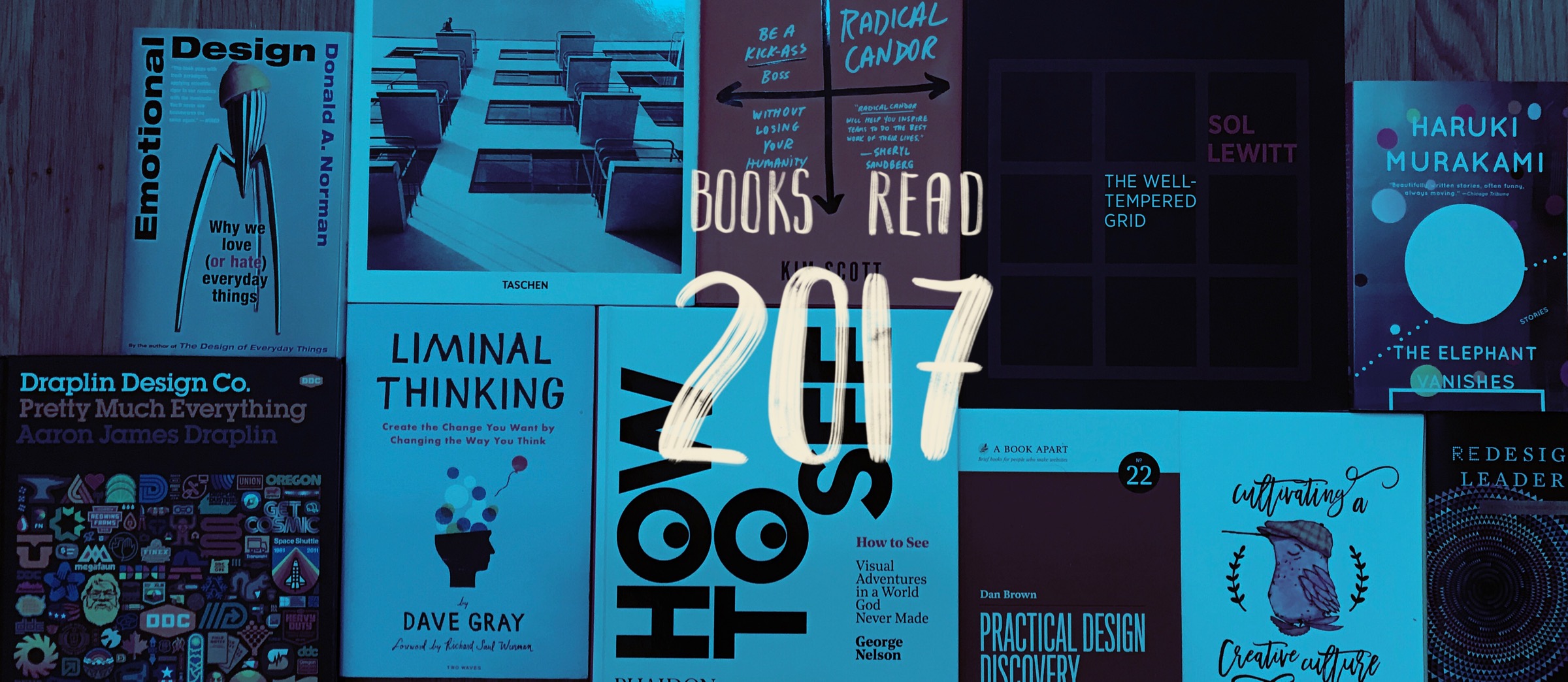
This year I read 14 books, which is 8 fewer than the 22 I read last year (view last year’s list here). Lower than I was hoping, but it at least averages out to more than 1 per month. I’m not too surprised, though, since I traveled a lot and was busier socially this year. Once again, I was heavy on the non-fiction — I only read 2 fiction books this year. Just 2! I need to up that number in 2018.
This book really opened my eyes to the world of service design and thinking about a person’s experience beyond just the confines of the screen. Using the product is just one part of a person’s overall experience accomplishing their goal. This book is a great primer on the subject.
by Charles Haxthausen, Christianna Bonin, and Erica Dibenedetto
I’ve been quite taken by Sol LeWitt’s work after seeing his art at various museums, such as the SF MOMA. I finally bought a book to learn more about his work and approach to art. This inspired me to re-create his work programmatically.
This is the first Franzen book I’ve read, and I thoroughly enjoyed it. I’ve been interested in him for a long time because David Foster Wallace is a fan of his. A well-written, engaging tale of a family’s troubles, anxieties, and the “corrections” they need to make to keep their lives intact.
Great book on managing people. Highly recommended for anyone who manages or is interested in managing. Even if you’re an individual contributor it’s worth reading because it will help you be a better employee and have a better relationship with your boss.
This companion to Norman’s The Design of Everyday Things is just as good as its better-known sibling. In this book he focuses on the emotional and aesthetic side of design, and why those elements are an important part of designing a successful product. He goes beyond fluffy, surface-level explanations, though, and explains the why behind these phenomenon using science, psychology, and biology. This makes for a convincing argument behind the importance of this aspect of design, which can often be written off as “nice-to-have” or self-indulgent.
On a chilly fall day a few weeks back, I gave a talk at the cozy Lean Kanban Central Europe in Hamburg, Germany. I was honored to be invited to give a reprise of the talk I gave with Keith earlier this year at Lean Kanban North America.
I spoke about Optimizely’s software development process, and how we’ve used ideas from Lean Kanban and ESP (Enterprise Service Planning) to help us ship faster, with higher quality, to better meet customer needs. Overall it went well, but I had too much content and rushed at the end. If I do this talk again, I would cut some slides and make the presentation more focused and concise. Watch the talk below.
One of the cool things this conference does is give the audience green, yellow, and red index cards they can use to give feedback to the speakers. Green indicates you liked the talk, red means you didn’t like it, and yellow is neutral.
I got just one red card, with the comment, “topic title not accurate (this is not ESP?!).” In retrospect, I realized this person is correct — my talk really doesn’t talk about ESP much. I touch on it, but that was what Keith covered. Since he dropped out, I mostly cut those sections of the presentation since I can’t speak as confidently about them. If I did this talk solo again, I would probably change the title. So thank you, anonymous commenter 🙏
I also got two positive comments on green cards:
Thanks for sharing. Some useful insights + good to see it used in industry. - Thanks.
And:
Thank you! Great examples, (maybe less slides next time?) but this was inspiring
I started hand lettering about a year and half ago, and I thought it would be fun to see the progress I’ve made by comparing my early, crappy work to my recent work. I started hand lettering because a coworker of mine is a great letterer and I was inspired by the drawings he would make. I tried a few of his pens and found that trying to recreate the words he drew forced me to focus on the shape of the letter and the movement of the pen, which was intoxicating and meditative. So I bought a few pens and started practicing. Here’s the progress I’ve made so far.
Early Shiz
A bunch of shitty G’s. Poor control of the pen; poor letter shapes.
Goldsmiths. Better pen control and shapes, but still pretty bad.
A lot of really inconsistent and shaky “a’s” and “n’s”.
Happy Holidays. Better, but still some pretty poor loops and letter spacing.
Some really shitty looking M’s.
Newer Shiz
Much cleaner and smoother. Better loops and letter spacing. You can also see my warm-ups at the top :)
Better spacing, and fairly consistent thicks, thins, and letter shapes. I like drawing “aluminum” because it has a lot of repeating letters and shapes that require consistent strokes and spacing.
I still have a lot of room to improve, but compared to a year ago I’ve made a lot of progress. You can see all of my work at http://jlzych.com/scribbles.
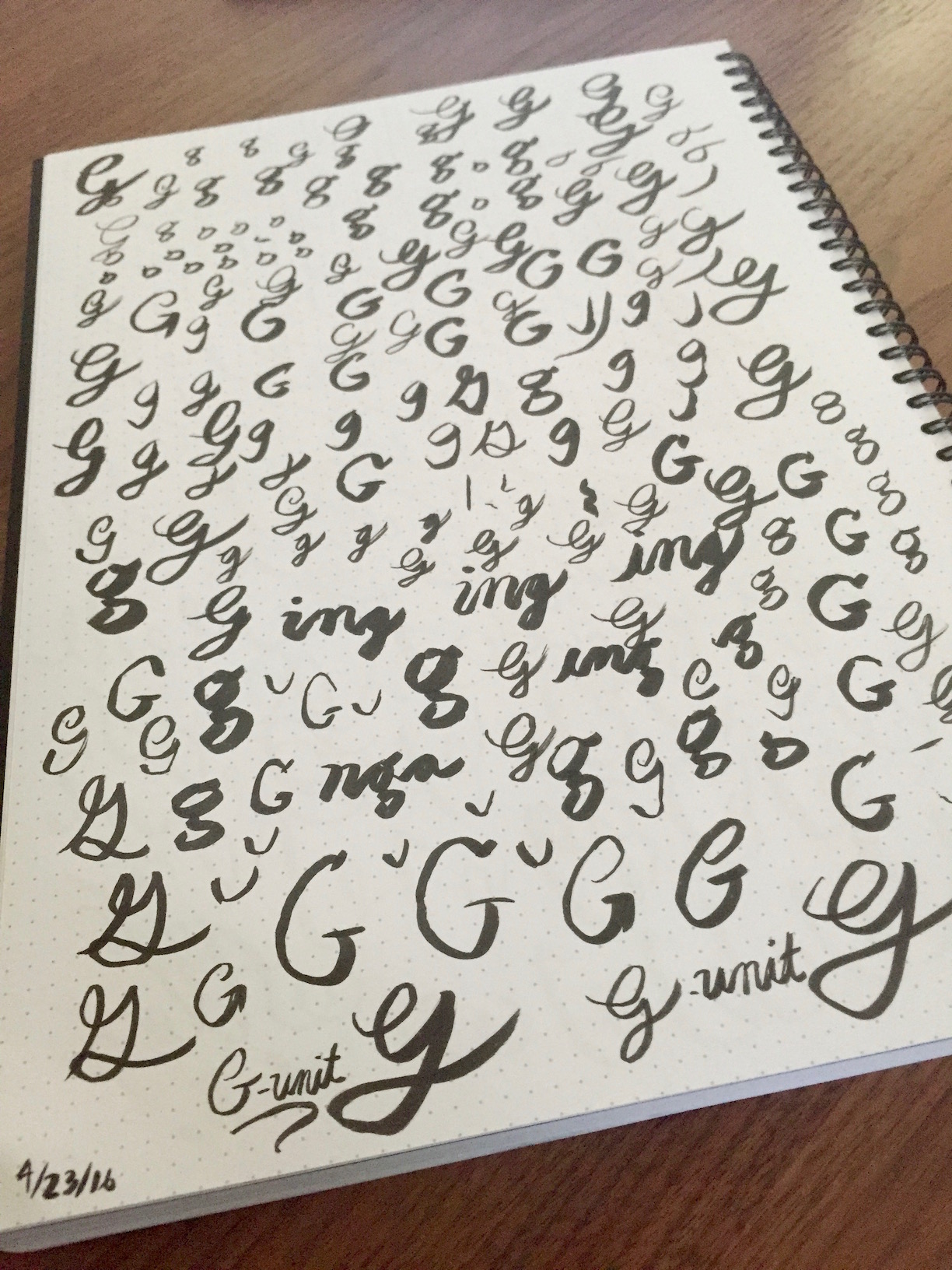 A bunch of shitty G’s. Poor control of the pen; poor letter shapes.
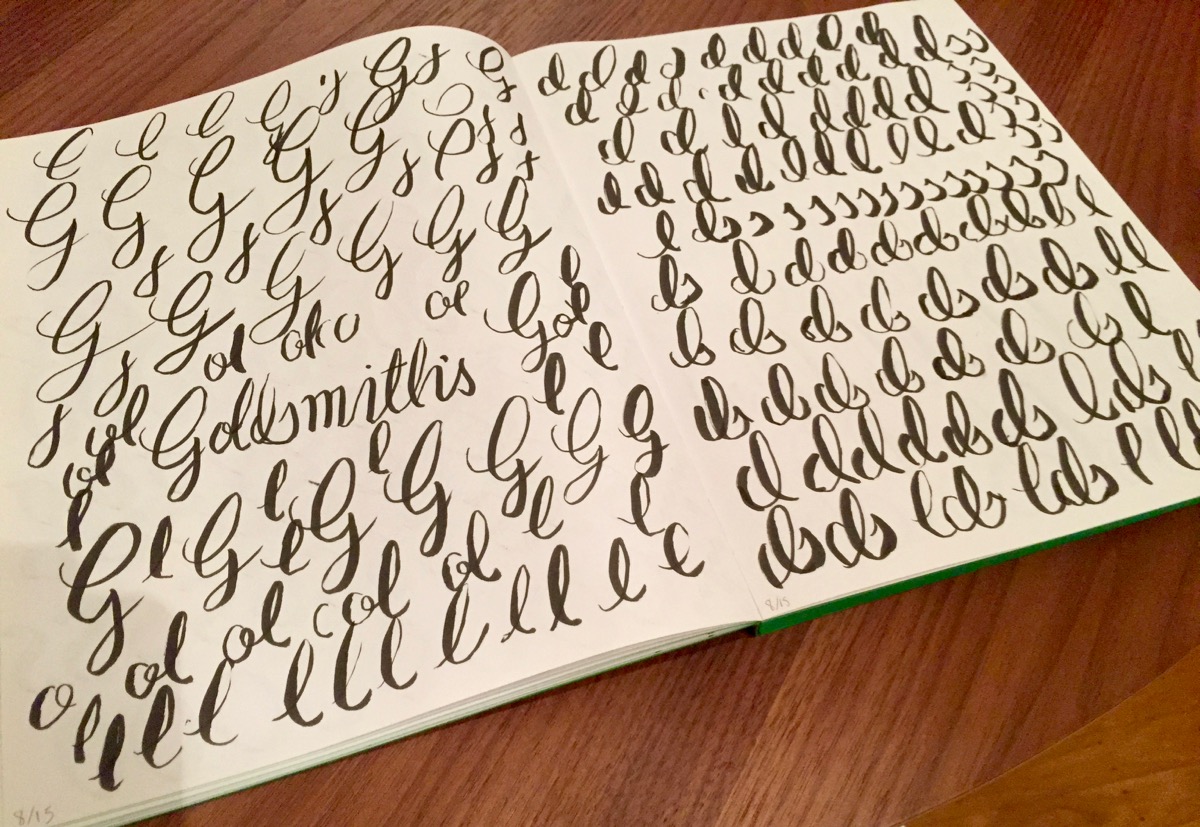 Goldsmiths. Better pen control and shapes, but still pretty bad.
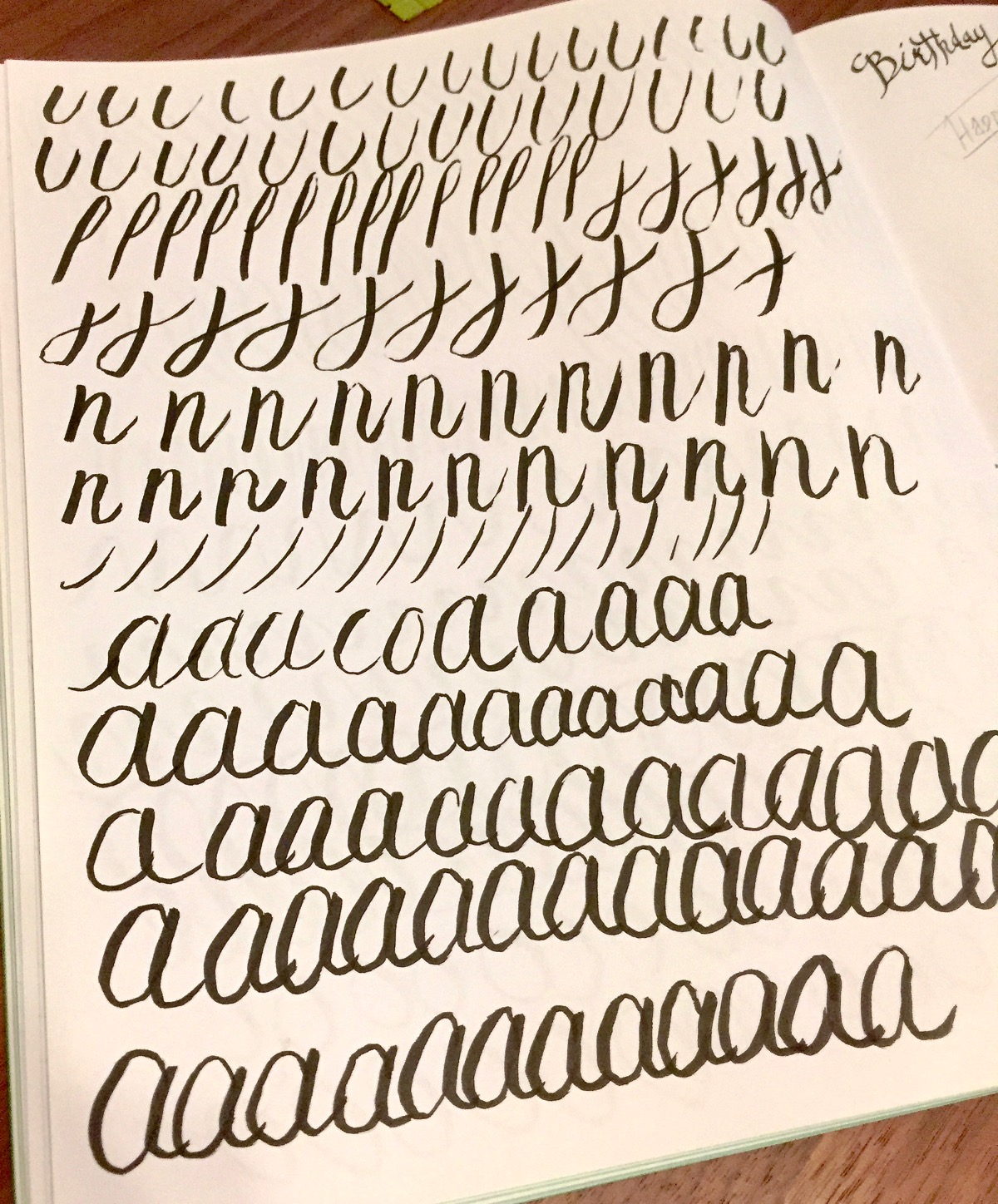 A lot of really inconsistent and shaky “a’s” and “n’s”.
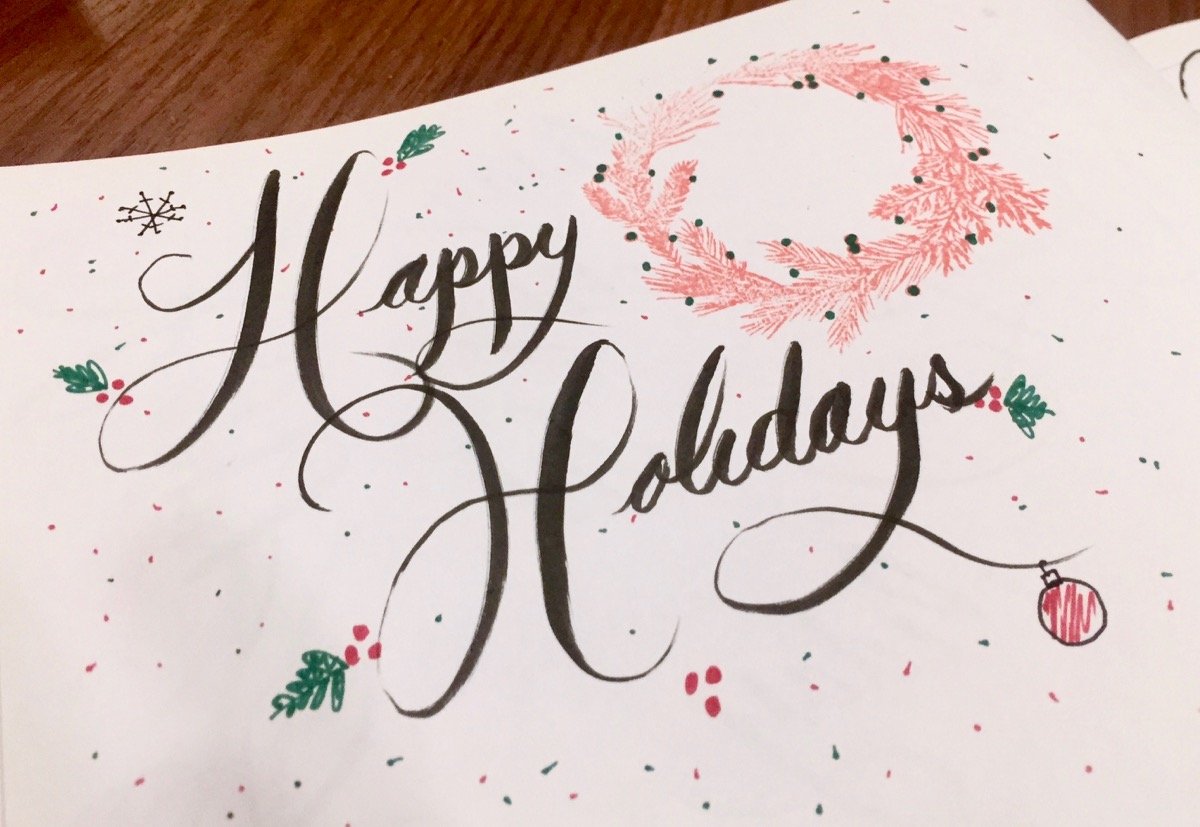 Happy Holidays. Better, but still some pretty poor loops and letter spacing.
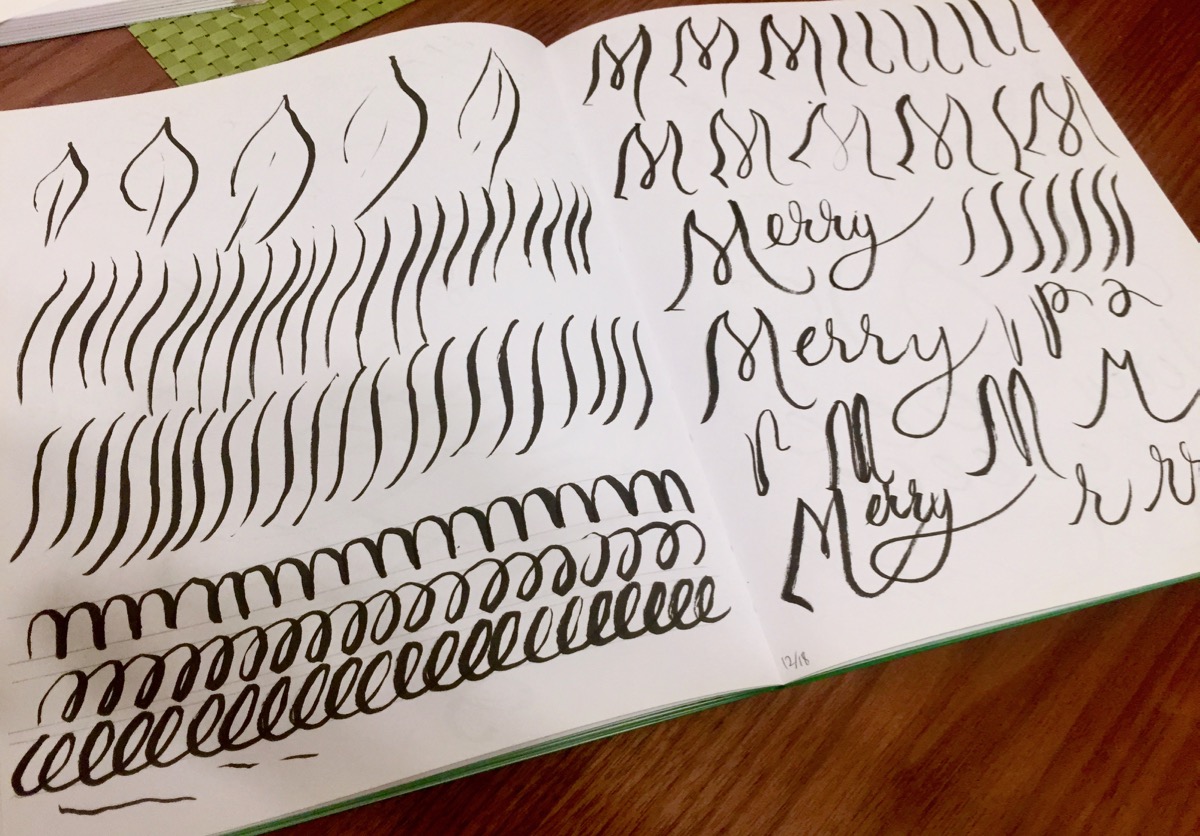 Some really shitty looking M’s.
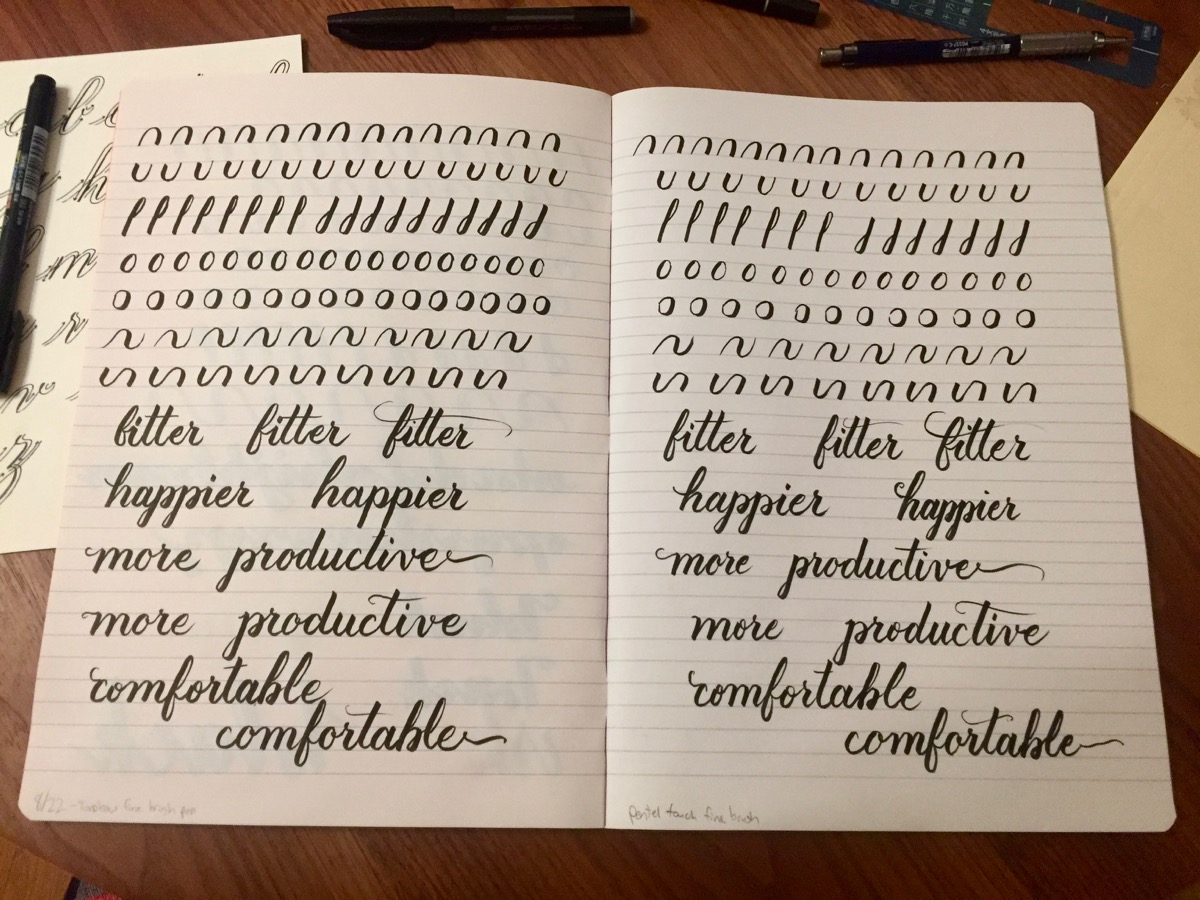 Much cleaner and smoother. Better loops and letter spacing. You can also see my warm-ups at the top :)
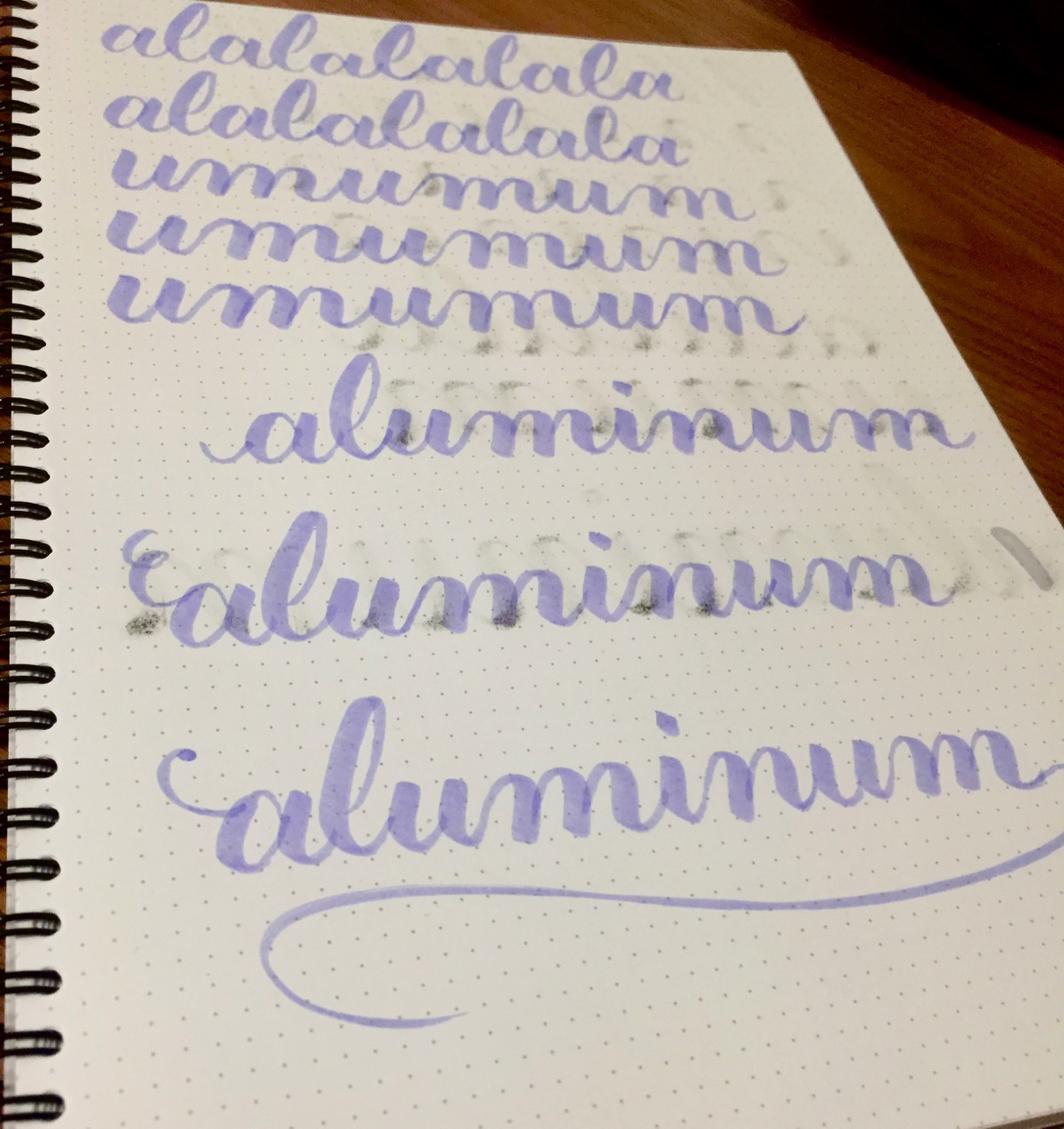 Better spacing, and fairly consistent thicks, thins, and letter shapes. I like drawing “aluminum” because it has a lot of repeating letters and shapes that require consistent strokes and spacing.